
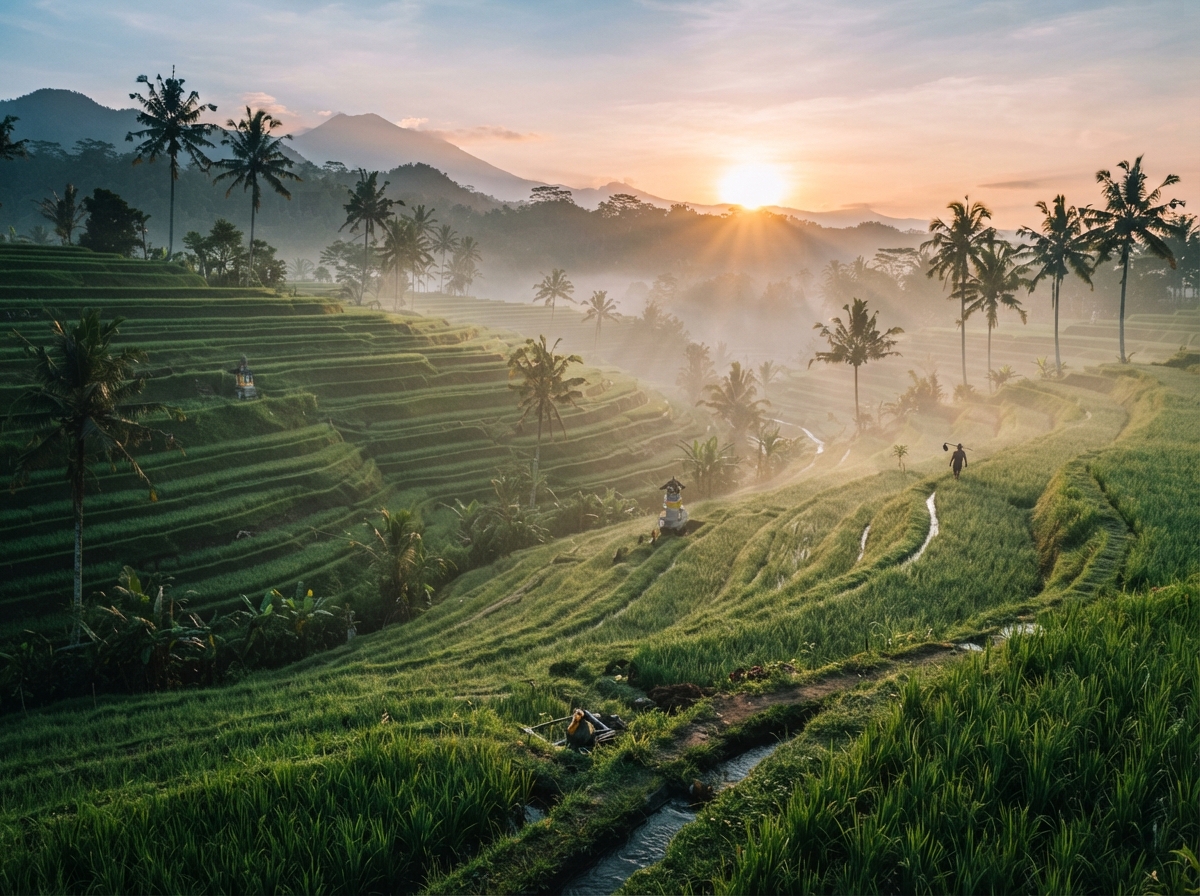
Bali’s appeal is not only its scenery. UNESCO’s Cultural Landscape of Bali Province centers the subak irrigation system, water temples and the philosophy of Tri Hita Karana. The system links agricultural production, community cooperation and spiritual practice, showing why rice terraces are cultural infrastructure as much as landscape.
Sidemen is useful for understanding this slower Bali. Rice fields, craft workshops and village roads create a setting where agriculture remains visible beside tourism. In Ubud and other cultural centers, the same principle appears through dance, carving, painting, cuisine and temple life.
For visitors, the key is to treat cultural Bali as participation with boundaries. Dress appropriately, follow temple rules, ask before photographing ceremonies and choose local experiences that respect farming and community schedules.
A better Bali itinerary
Combine one cultural landscape with one craft practice and one food experience. Keep resort time, but do not let the resort become the entire geography of the trip. A half-day with a local host can provide more context than a full day of attraction-hopping.