
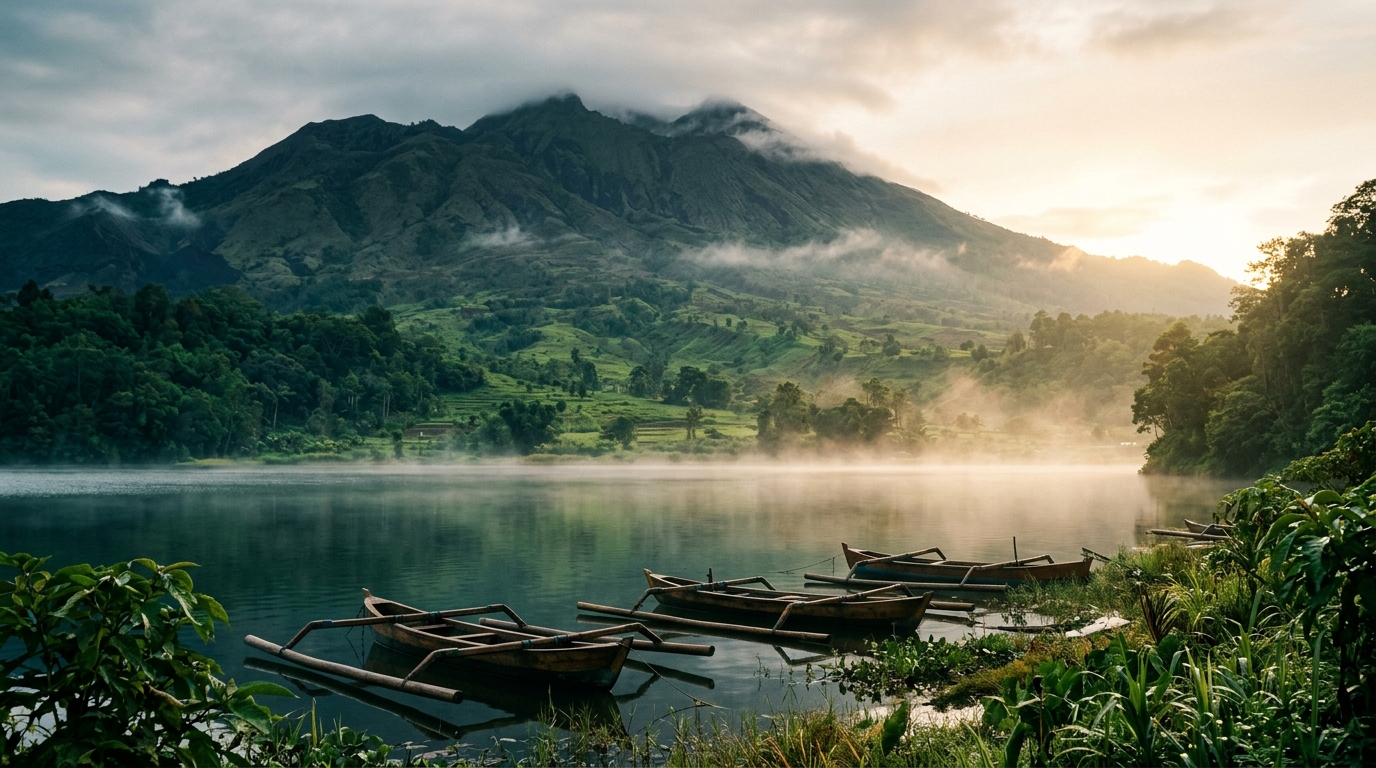
Indonesia is not replacing Bali; it is widening the map around it. The most interesting shift is from destination-as-checklist travel toward slower journeys organized around landscape, culture, food, craft, and local interpretation. Flores, Komodo, Yogyakarta, Sumatra and parts of Sulawesi each offer a different answer to the same question: what does it mean to arrive somewhere rather than simply pass through it?
Labuan Bajo illustrates the change clearly. It has become the service gateway to Komodo National Park, where terrestrial landscapes, coral-rich waters, sailing routes and wildlife conservation intersect. Indonesia Travel describes Labuan Bajo as a principal gateway to the park, while UNESCO recognizes Komodo National Park for its exceptional natural values. The practical implication is that the trip is not only a boat itinerary; it is a movement through a managed conservation landscape.
Sumba and Flores add a different cultural dimension. Traditional villages, weaving, agricultural rhythms and highland landscapes create experiences whose meaning depends on timing and local context. The strongest journeys therefore leave room for interpretation: a village visit becomes more than a photo stop when a local host can explain why a house is built a certain way, which ceremony is appropriate to observe, and what should remain private.
The new premium is context
For experienced travelers, exclusivity increasingly means access to context rather than access to scarcity. A private boat can be booked in many places; a carefully introduced visit with the right local custodian is harder to replicate. This is where responsible local access becomes part of itinerary design.
The next generation of Indonesia travel will likely be less about adding more destinations and more about connecting fewer places with better transitions: a heritage stay followed by a craft workshop, a coffee origin visit linked to a culinary table, or a sailing route that is planned around weather, conservation rules and local calendars.
What to plan
Build around geography, not just attraction lists. Allow transfer time, weather buffers and community schedules. In protected landscapes, follow ranger and conservation requirements. In culturally sensitive settings, ask before photographing rituals or people. The best itinerary is often the one that leaves enough space for the place to speak.