
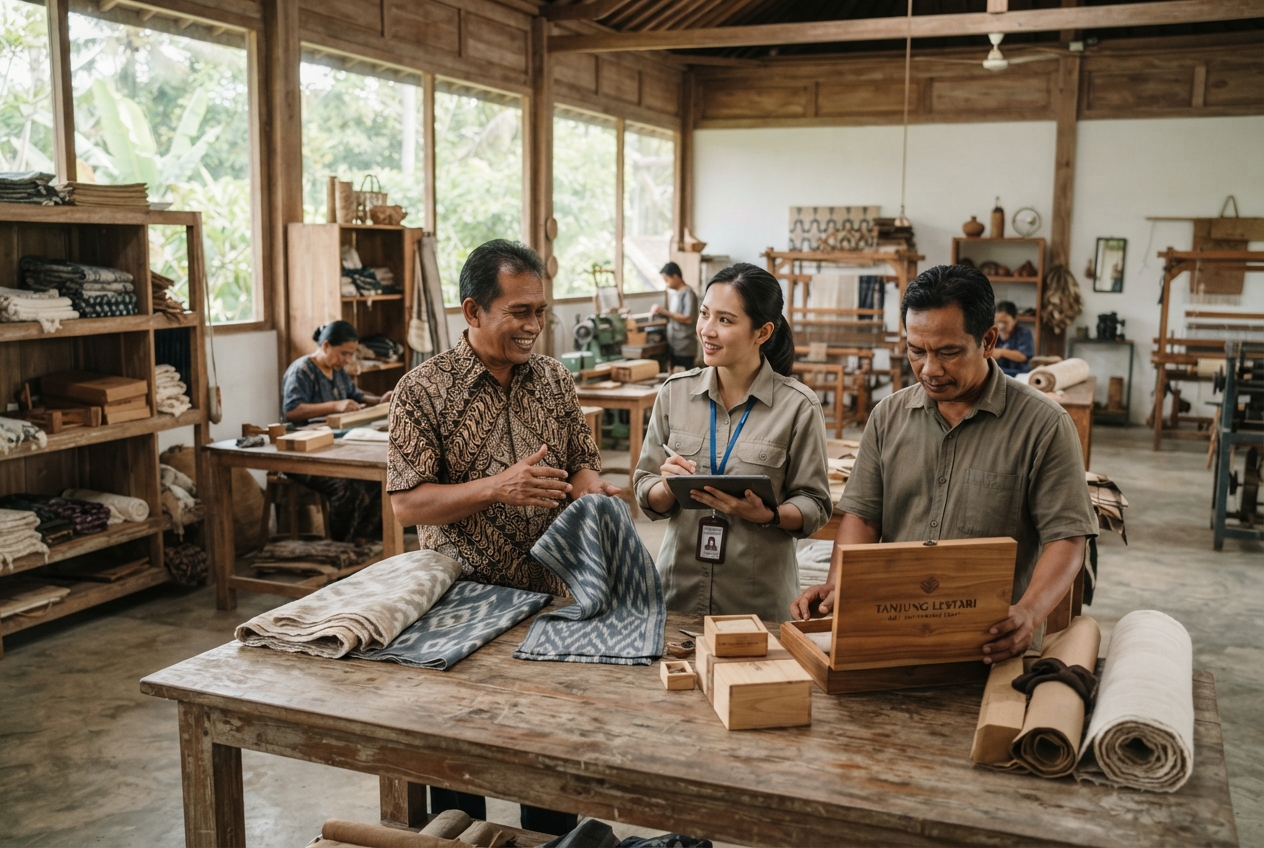
Batik is often presented as a pattern, but the deeper story is knowledge transmission. The UNESCO inscription of Indonesian Batik recognizes the craft as an intangible cultural heritage, including its techniques, symbolism and social functions. That distinction matters: a printed fabric may imitate a visual style, while a batik tradition carries skills that are learned through repetition, judgment and cultural context.
In Java, different centers developed their own visual languages and production cultures. Solo is strongly associated with court-influenced traditions and refined motifs; Pekalongan became known for a more outward-looking coastal batik culture shaped by trade and cultural exchange. Neither is static. Contemporary makers adapt colors, formats and markets while retaining techniques that distinguish hand-made work from industrial printing.
The workshop itself is a classroom. Wax temperature, canting control, line thickness, dye sequencing and fabric preparation are learned through practice. A master does not simply hand over a finished recipe; the apprentice develops a visual and tactile judgment that becomes difficult to document in a spreadsheet.
Why mechanization changes the conversation
Industrial printing can reproduce motifs at scale and lower cost, which is useful for mass markets. The challenge is making sure consumers understand the difference between printed pattern, stamped batik and hand-drawn batik. Transparency protects both buyers and artisans.
For visitors, the best workshop experiences focus on process rather than performance. Ask to see unfinished work, learn how wax is applied, and understand how many stages a piece passes through. Buying directly from a maker can turn the souvenir into a relationship with the craft rather than simply a transaction.
A living tradition, not a museum object
UNESCO’s broader Indonesian heritage listings show that cultural practices remain active across generations. Batik’s future depends on apprentices, design experimentation, fair economics and consumers willing to pay for skilled labor. The strongest preservation strategy is therefore not freezing the craft in time, but keeping it economically and socially viable.