
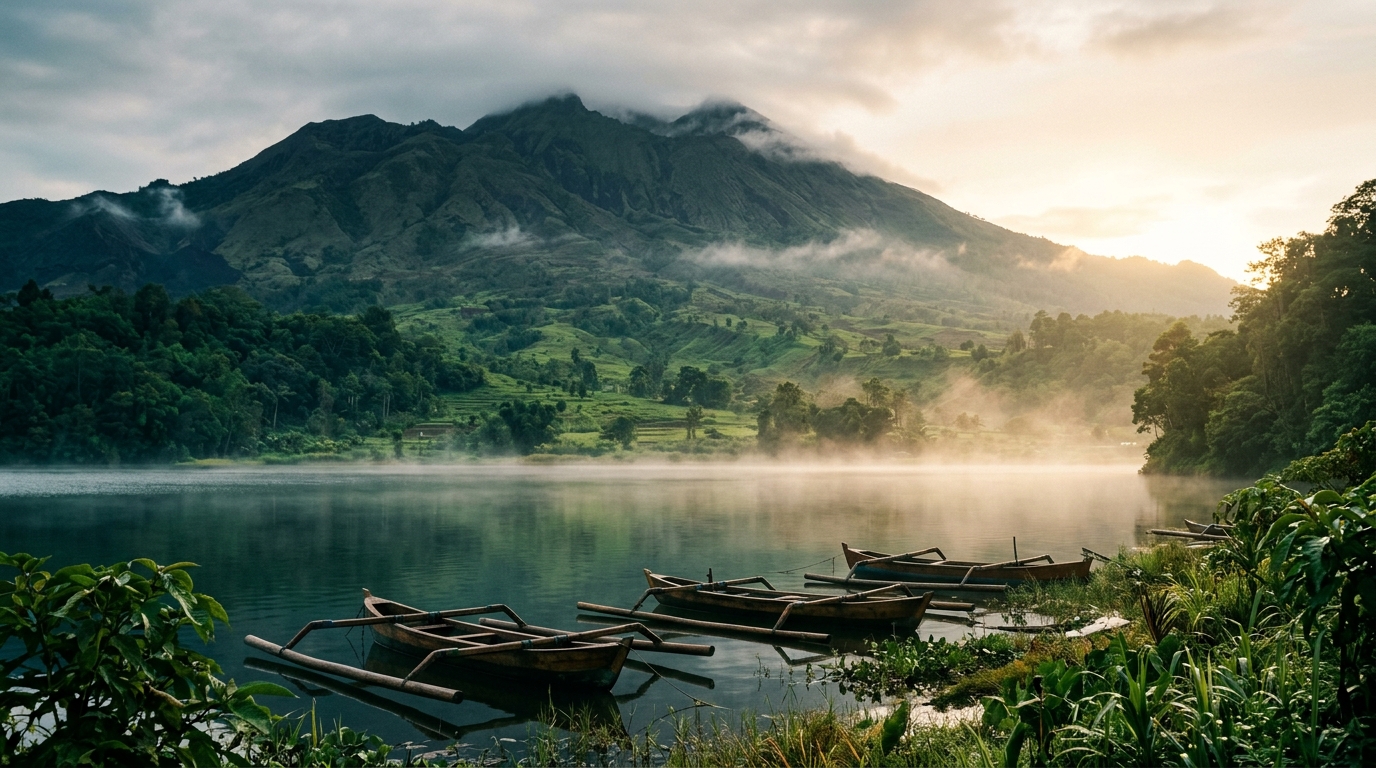
Indonesia’s coffee map is a geography lesson in miniature. Elevation, rainfall, volcanic soils, varieties, farming systems and post-harvest choices combine to create regional identities that are recognizable in the cup. Gayo in Aceh, Java’s highlands, Flores Bajawa and Toraja are not simply different labels; they represent different production landscapes and local histories.
Gayo Arabica is closely associated with the highlands of Aceh. Indonesia Travel notes that Arabica Gayo is one of the country’s widely consumed and exported coffees and is known for a strong, complex profile. The region’s reputation is tied not only to the bean but also to the network of smallholders, collectors, mills and cooperatives that move coffee from mountain farms toward export channels.
Flores offers a contrasting origin story. Bajawa coffee is grown in volcanic highland terrain and traditional cultivation practices remain important. The result is a coffee identity often described through floral, sweet and balanced characteristics. Toraja in South Sulawesi adds another mountain-origin story, with highland cultivation and a long reputation among specialty coffee buyers.
The supply chain is part of the flavor
For buyers, origin claims become meaningful only when the chain can be traced. Lot separation, farm or cooperative records, processing details, moisture control, storage, milling and export documentation all affect whether a single-origin promise can be defended.
This is why visiting an origin is more useful when it goes beyond a plantation photo. The valuable questions are operational: Who owns the lot? Where is it processed? How is quality measured? How are defects handled? What happens between the washing station and the port?
Traveling through coffee country
Coffee-origin travel can be designed as an agricultural and cultural journey: farm observation in the morning, processing or cupping in the afternoon, and conversations with growers or cooperative staff before moving on. The experience becomes richer when visitors understand that coffee is both an agricultural product and a livelihood system.